
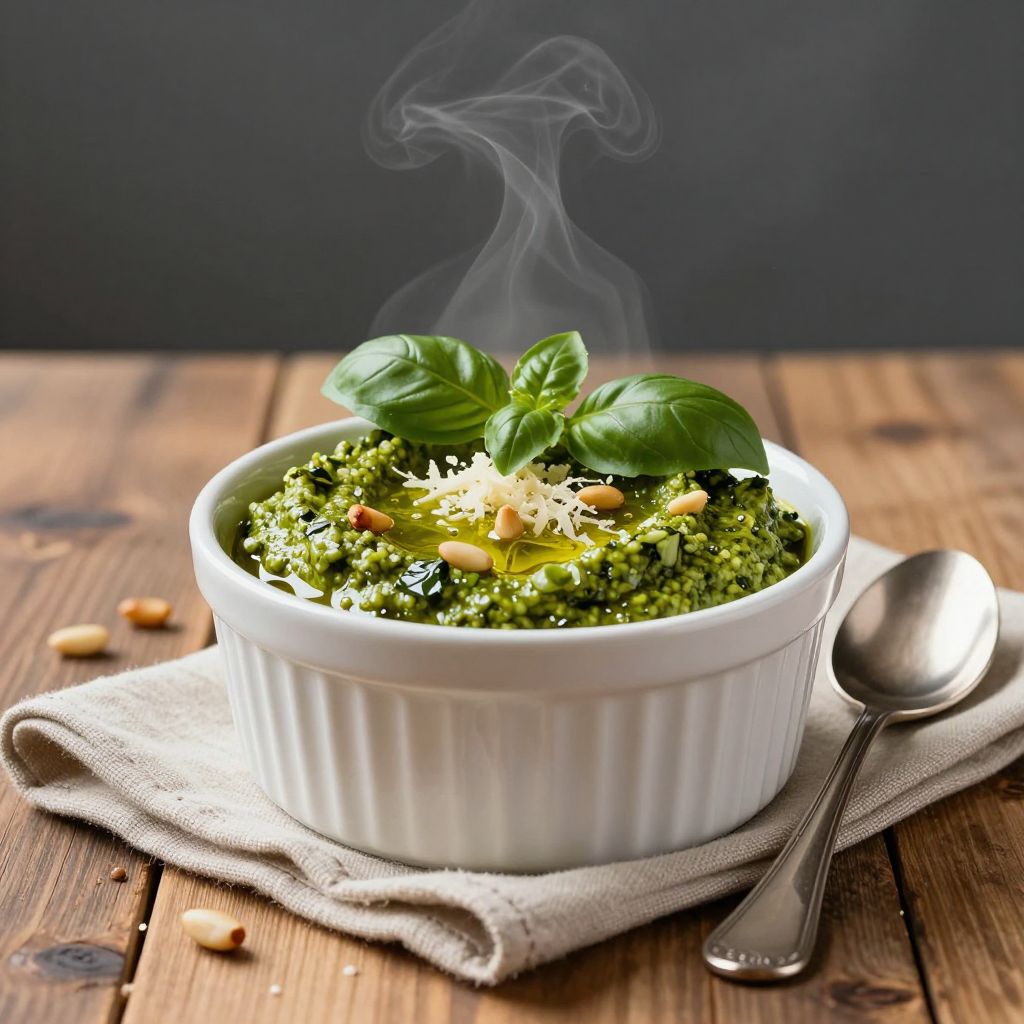
If you have ever dipped a piece of crusty bread into a vibrant green paste and thought, “Wow, what is this magic?” then you have probably tasted real Italian pesto.
This stuff is like a flavor grenade for your mouth. And the best part? You can actually make it at home without turning your kitchen into chaos.
Once you try it fresh, you will never look at the jarred stuff the same way again.
Why Pesto Deserves A Spot In Your Life
Pesto is simple, fresh, and full of bold flavor. It kicks up your pasta game, turns sandwiches into divine experiences, and basically makes anything on your plate better.
You know that moment when a boring dish suddenly feels gourmet? That is pesto working its magic.
But let’s be real. Not all pesto is created equal. Some store jars taste like they gave up halfway through life. If you want the good stuff, you have to make it yourself. Thankfully, it is much easier than it looks.
What Makes A Classic Italian Pesto
The Core Ingredients
- Fresh Basil: You want it bright green and fragrant. No brown spots or droopy leaves.
- Garlic: A little goes a long way unless you are battling vampires this weekend.
- Pine Nuts: They are pricey but worth every penny.
- Parmesan Cheese: Go for fresh blocks and grate it yourself.
- Extra Virgin Olive Oil: Since you are not cooking it, use the good kind.
- Salt: Just enough to make the flavors pop together.
That is it. Six ingredients. No additives. No nonsense. Just pure flavor.
Can You Use Substitutes?
Of course you can. This is not culinary jail. Try these swaps if you are missing an ingredient or want to mix things up.
- Use walnuts or almonds instead of pine nuts
- Try pecorino instead of parmesan
- Swap spinach or arugula if basil is out of season
Do they change the flavor? Sure. Do they still taste good? Totally.
Ingredients
- 2 cups packed fresh basil leaves
- 2 cloves garlic (peeled)
- 1/4 cup pine nuts
- 1/2 cup freshly grated parmesan cheese
- 1/2 cup extra virgin olive oil
- 1/4 teaspoon salt (or to taste)
How To Make Pesto
Step 1: Toast The Pine Nuts
Put the pine nuts in a dry skillet over medium heat. Shake the pan occasionally and toast until golden. This boosts their rich flavor and gives the pesto a deeper nutty kick. It takes about 3 to 5 minutes. Keep an eye on them unless you love the taste of regret.
Step 2: Load The Food Processor
Add basil, toasted pine nuts, garlic, and salt into your food processor. Pulse a few times until everything breaks down a bit. You want small chunks, not baby food.
Step 3: Add The Cheese
Toss in that pile of freshly grated parmesan. Pulse until combined but still textured. Smooth pesto is nice, but we want something that feels alive, not paste-like.
Step 4: Pour In The Olive Oil
Slowly stream in the olive oil while running the processor. Let it swirl into a loose, glossy paste. If it gets too thick, just add a splash more oil. Easy fix.
Step 5: Taste And Adjust
Scoop out a small spoonful and taste it. Too sharp? Add more cheese. Too thick? Add more oil. A bit bland? Sprinkle more salt. It is your pesto, make it perfect for you.
How To Use Your Pesto Without Getting Bored
You could toss it with pasta and call it a day. Delicious, but predictable. Let’s dream bigger.
- Spread it on sandwiches. Your plain turkey sandwich will feel fancy instantly.
- Spoon it over grilled chicken. Flavor overload in the best way.
- Drizzle it on roasted veggies. Suddenly, veggies become the star.
- Stir it into scrambled eggs. A small scoop changes everything.
- Mix it into salad dressings. Quick upgrade, zero effort.
Still think pesto is just for pasta? Think again.
Should You Make A Big Batch?
Only if you like saving time and sanity. Pesto freezes beautifully. Pour it into ice cube trays, freeze, then pop them out when needed. One cube equals about one serving for pasta. It is the meal prep trick for people who cannot stand complicated routines.
Tips From My Own Kitchen Chaos
I make pesto weekly when basil is cheap. The first time, I used too much garlic, and it burned my taste buds off. Lesson learned. Start small and adjust.
Also, rinse the food processor immediately after making it. That sticky green mess sets faster than cement. Been there, scraped that.
Your Homemade Pesto Questions, Answered
Can I Make It Without A Food Processor?
Yes! You can use a blender or even a mortar and pestle. It takes more effort, but you will feel like a culinary hero afterward.
How Long Does It Last?
In the fridge, it stays fresh for about five days in a sealed container. Add a thin layer of olive oil on top to keep it from turning brown. In the freezer, it lasts up to three months.
Can I Make It Vegan?
Definitely. Swap the cheese for nutritional yeast or a dairy-free parmesan. The flavor changes slightly but stays delicious.
What If It Turns Brown?
That is just oxidation. Use it fresh or store it properly. Even if it browns a bit, it still tastes great. Not as pretty, but still a winner.
Final Thoughts
Making pesto seems fancy until you try it and realize how easy it is. It is quick, flexible, and makes everything taste better. Store brands cannot touch the vibrancy of fresh basil and real ingredients.
Grab some basil and start blending. Your taste buds will throw a party. Once you taste the fresh version, there is no going back.
If you enjoyed learning how to make homemade pesto, check out easy pasta sauce or explore simple Italian recipes for more fun kitchen wins.
Classic Italian Pesto
Ingredients
Method
- Place 1/4 cup of pine nuts in a dry skillet over medium heat. Toast for 3 to 5 minutes, shaking the pan occasionally, until golden and fragrant. Remove from heat and let cool slightly.
- In a food processor, combine 2 cups packed fresh basil leaves, toasted pine nuts, 2 cloves garlic, and 1/4 teaspoon salt. Pulse several times until coarsely chopped.
- Add 1/2 cup freshly grated parmesan cheese to the processor and pulse until the mixture is well combined but still textured.
- While running the processor on low, slowly stream in 1/2 cup extra virgin olive oil until it forms a loose, glossy paste. If the mixture is too thick, add a bit more olive oil as needed.
- Taste the pesto. Adjust seasoning by adding more salt, cheese, or oil to suit your preference. Use immediately or store as needed.